What happened
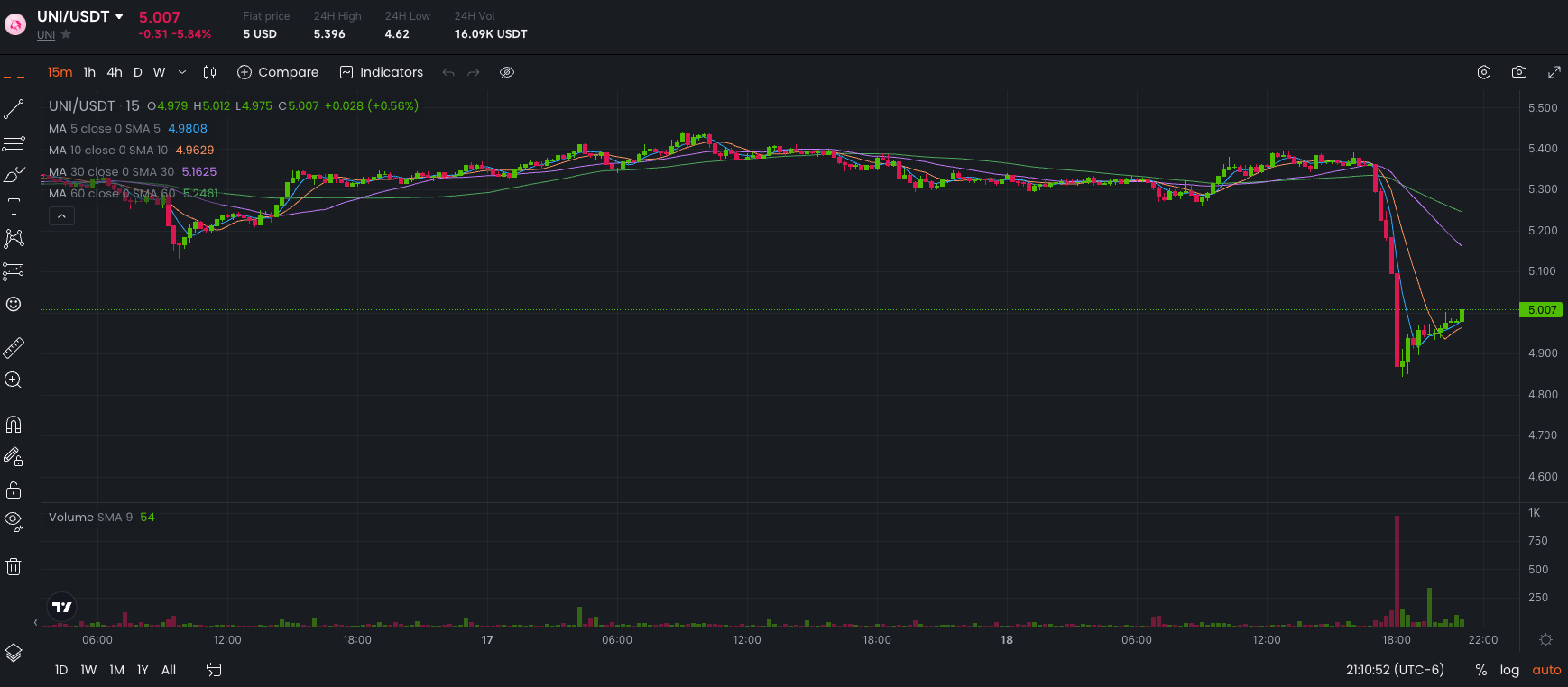
UNI experienced a sharp, fast downside move followed by sideways consolidation and a gradual recovery. On lower timeframes, this kind of move can feel dramatic — but context matters more than candles.
This chart captures three important phases:
- Compression and drift before the move
- A sudden liquidity event (fast sell-off)
- Stabilization and rebuilding of structure
None of these, on their own, invalidate a long-term hold thesis.
Why I’m holding UNI
This position is not a short-term trade. It’s a structural bet tied to:
- protocol relevance
- long-term adoption
- market cycles, not intraday noise
Short-term volatility is expected — especially in crypto.
The key question isn’t “did price drop?” It’s “did the thesis change?”
So far, it hasn’t.
Reading the chart, not reacting to it
A few observations from the price action:
- The sell-off was fast and emotional, not a slow structural breakdown
- Price stabilized quickly, suggesting sellers exhausted early
- Moving averages lag behind price after sharp events — that’s normal
- Sideways action after a drop often signals absorption, not failure
This is exactly the environment where emotional decisions tend to underperform.
What I’m watching instead of price
Rather than reacting to red candles, I’m focused on:
- whether UNI continues to trade and attract volume
- whether market structure rebuilds over time
- whether my original reasons for holding still make sense
So far, nothing here forces action.
The discipline of holding
Doing nothing is often the hardest move.
This log exists as a reminder:
- volatility ≠ failure
- movement ≠ meaning
- structure matters more than speed
Unless something fundamental changes, UNI remains a hold.